
Keynote Speakers – 13th Biennial All Iowa Virology Symposium

All Iowa Virology Symposium, 13th Biennial, March 6-7, 2026, Iowa State University

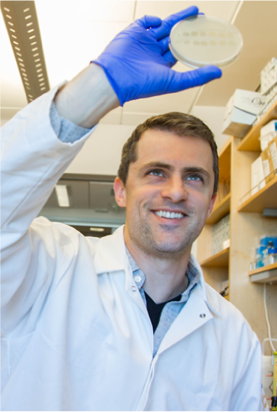
Joseph Bondy-Denomy, PhD

Professor, Department of Microbiology & Immunology, University of California San Francisco

Joseph Bondy-Denomy is a Professor in the Department of Microbiology & Immunology at the University of California, San Francisco. Prior to coming to UCSF, Joe was a PhD student with Alan Davidson at the University of Toronto, where he studied CRISPR-Cas system and phage-encoded anti-CRISPR proteins.

The Bondy-Denomy lab is broadly interested in understanding mechanisms by which bacteriophages evade bacterial nucleases such as CRISPR-Cas and restriction-modification through mechanisms that include “phage nucleus” compartments, anti-CRISPR enzymes, and phage base modifications. The lab has also works extensively on the immunity and anti-immunity mechanisms of Gabija, CBASS, and Thoeris. Moreover, the group is specifically focused on mechanisms that bacteria have developed to antagonize a specific family of broad host range jumbo phages. A long-term goal is to rationally identify causal barriers to phage success in Pseudomonas aeruginosa clinical isolates and systematically engineer phages to overcome those barriers. Work in the Bondy-Denomy lab has been funded by the NIH, DARPA, the Searle Scholars Program, the Vallee Foundation, and the Innovative Genomics Institute.

Anice Lowen, PhD

Professor, Department of Microbiology and Immunology, Emory University School of Medicine

Anice Lowen is a Professor in the Department of Microbiology and Immunology at Emory University, Principal Investigator of the Emory Center of Excellence for Influenza Research and Response (CEIRR) and Co-Director of the Emory Center for Transmission of Airborne Pathogens.

The Lowen Lab uses molecular tools, classical virology, and both human and animal models of infection to study the biology of RNA viruses, with a focus on influenza A virus. We are particularly interested in features of viral biology that shape evolutionary dynamics and the mechanisms governing transmission between individuals.

Peter Nagy, PhD

Professor, Department of Plant Pathology, University of Kentucky

Peter Nagy is a Professor in the Department of Plant Pathology, University of Kentucky.

The Nagy lab uses Tombusviruses, small model RNA viruses of plants, to identify the viral and host players in replication and to unravel the mechanism of virus replication.  The Nagy lab has developed powerful cell-free assays and yeast model host capable of supporting full virus replication. Genome- and proteome-wide screens led to the discovery of ~500 host factors affecting tombusvirus replication. Mechanistic details of pro-viral and antiviral factors are characterized to dissect the biogenesis of viral replication organelle, the site of virus replication. In addition to co-opted host proteins, lipid enzymes, glycolysis factors, membranes and actin filaments, tombusviruses also build biomolecular condensates to facilitate viral replication. The basic discoveries made with Tombusviruses are expected to influence studies on replication of important human and animal pathogens.